
Players drafted in round 1 of the MLB draft had the biggest expectations of any other players. They are the best players in their class, so they are expected to perform at a high level. However, there are many factors that contribute to a player’s future performance, including the ballpark of the team they are drafted by.
Round 1 players averaged:
- .74 singles per game
- .23 doubles per game
- .03 triples per game
- .21 home runs per game
- .05 grounded into double plays per game
- .325 batting average
Methodology: Player statistics were converted to per-game rates to account for differences in schedule length. Round 1 benchmarks represent the combined rate across the relevant Round 1 player pool rather than an unweighted average of individual player rates. High-school and college players were evaluated separately, and summer-league statistics were included where applicable. Batting average was calculated from combined hits and at-bats.
Grading Scale:
A – Best fit
B – Good fit
C – Normal fit
D – Not that great of a fit
F – Bad fit
Opinions made using this article
Note: I will be comparing each player’s stats from either their college career and summer league stats (if applicable), or their senior year stats if they are drafted straight from high school.
Scouting grades are according to MiLB only
***This is not grading whether the team should’ve drafted the player. It’s evaluating how well the player will perform in the MLB stadium of the team that drafted them***
#1: Roch Cholowsky, SS – Chicago White Sox
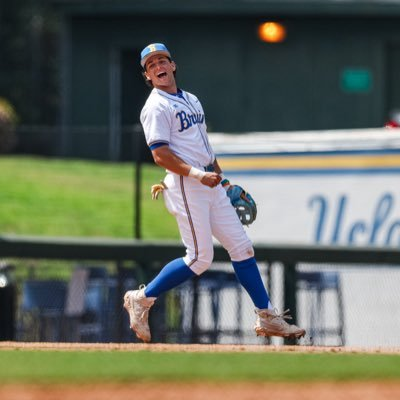
The number one pick in the draft. Back to back Big 10 player of the year. Roch Cholowsky played for UCLA for three years before being taken by the White Sox. He also logged one summer in the CCBL. With a 31.3% barrel rate in 2025, he packs a ton of righty power, hitting 53 home runs across 195 games played during his collegiate and summer league career. His power is directed towards left field, as he owns a 45.6% pull rate. The only thing that you could criticize about the guy, is that he only legged out 2 triples during those 195 games. In his scouting report, he scored a 60 on both contact and power. His run grade came in slightly below average at a 45.
As for the White Sox, Guaranteed Rate Field comes in just outside the top 10 in shortest distance to the left field pole from home plate, which is where Cholowsky would most likely hit if he stayed with the organization. They are also just outside the top 10 in home day games, which is another factor in the amount of home runs a batter hits. Even though their stadium doesn’t favor batters that have high contact rates (as they have some of the lowest average wall heights), Cholowsky’s dual threat power and contact skills always make him a dangerous hitter. With Guaranteed Rate Field having an average rank of 16th in average temperature, elevation, and outfield length (the factors that influence triples), Cholowsky’s lack of triples should not be a huge problem should he play for the White Sox at the major league level.
Overall Fit Grade: B
#2: Grady Emerson, SS – Tampa Bay Rays
The first high school player drafted, Grady Emerson is the #1 ranked draft prospect by MiLB. From Fort Worth Christian High School in Texas, Emerson was the 2026 Gatorade National Player of the Year, and the Gatorade Best Male Player of the year. He consistently gets the ball in play, with a scouting grade of 65 for contact, and his .508 batting average to show. His running is slightly above average at a grade of 55.
For the Rays, Tropicana Field ranks in the middle of the pack for max wall height. However, it has one of the biggest outfields, making it a great place for contact hitters like Emerson. Being a lefty pull hitter, Emerson can benefit from the short distance from home plate to the right field wall. With Tampa Bay playing most of their games during the day (a big factor in home runs hit), Grady hitting less home runs shouldn’t be much of an issue should he play with Tampa Bay at the major leagues.
Overall Fit Grade: A-
#3 Vahn Lackey, C – Minnesota Twins
Photo via Instagram (@gt_baseball)
The winner of the Johnny Bench Award and ACC Defensive Player of the Year, Vahn Lackey was drafted by the Twins out of Georgia Tech. He spent 3 summers at the SUNB, CCBL, and NWDS. An incredibly balanced hitter, Lackey’s scouting grades for contact and power both came in at 60. His hitting is directed towards left field, as he had a 44.4% pull rate his last year of collegiate baseball. His run scouting grade comes in at 50. However, he grounds into double plays 65% more than the average for college hitters selected in Round 1. His averages are a bit lower than other players drafted in his round, but his breakout junior-year season really showed what he was capable of.
As for the Twins, they have one of the furthest distances from home plate to left field, so that could be detrimental to Lackey’s righty pull tendencies. They don’t have a roof, and typically play a lot of home day games, which might help offset Lackey’s double play and lack of doubles tendencies. Target Field averages a rank of 14 across average temperature, elevation, and length of field, which mostly likely won’t aid in Lackey’s lack of triples. Also, its rank of 16 in length of outfield shouldn’t benefit nor harm Lackey’s contact and power hitting abilities.
Overall Fit Grade: C+
#5 Derek Curiel, CF – Pittsburgh Pirates
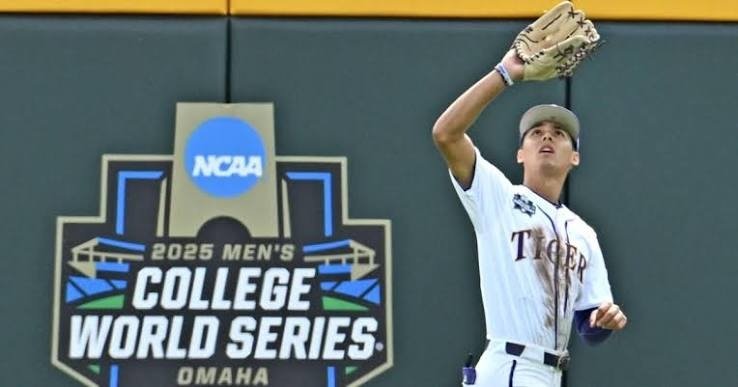
Photo by Hilary Scheinuk / The Advocate
ABCA Gold Glove Team and Second-Team All-SEC member Derek Curiel ranks #65 of all prospects in baseball. Hitting 30% more doubles than the average player drafted in round one, and hitting for .92 singles per game, Curiel is consistently on base. This is shown through his .349 collegiate career batting average, and a grade of 60 for contact on his scouting grade. He is a true contact hitter, as his home runs per game (.1) compared to the round 1 average (.21) is much lower, reflecting his power scouting grade of 45. He does have slightly above average speed, coming in at a grade of 55. His talent is that he can use the entire field, although evaluators believe he has hidden pull side power.
As for the Pirates, a lack of a roof over PNC Park probably won’t help Curiel’s single and double tendencies. However, their shorter outfield can encourage softer contact on batted balls, benefiting contact hitters like Curiel, who hit very accurately. The Pirates play a standard amount of day games, which doesn’t help nor harm Curiel’s lack of home run ball. However, should the organization’s hitting coaches try to push Curiel towards hitting the long ball towards his pull side (right field since he’s a lefty), PNC Park’s short distance to right field could complement that adjustment.
Overall Fit Grade: C+
#6 Zion Rose, LF – Kansas City Royals
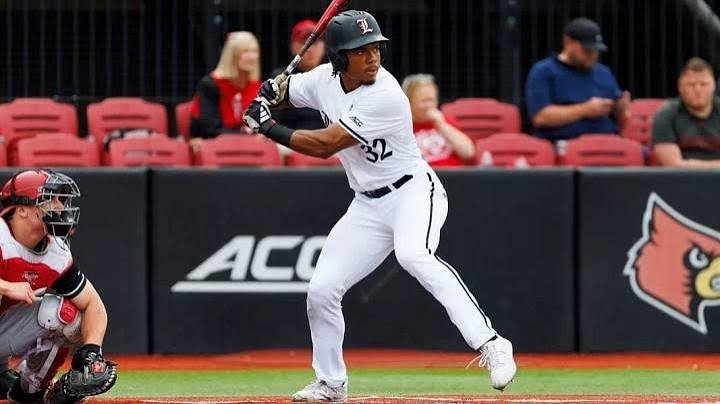
Photo by Adam Creech / Louisville Athletics
Zion Rose played 3 years at Louisville before being drafted by the Royals. He’s a consistent player, with his scouting grades for contact and hitter both at 55. He grounds into double plays almost 2.02x less than the average round 1 player, and hits about 123% more triples. He is a pole to pole hitter, but scouts believe he could find more power if he pulled the ball towards left field, as he hits around 30% less home runs than his fellow Round 1 draftees. He has slightly above average speed, with his run grade being a 55.
As for the Royals, Kauffman Stadium’s open-air design should help prevent an increase in GDPs if he stays with the organization up to the majors. The stadium also has one of the highest elevations, highest average temperatures, and longest outfields, which align with conditions that typically increase triple tendencies. It doesn’t have the shortest or longest distance to the poles, so Rose probably won’t be particularly aided with his pole to pole tendencies. Kansas City plays an average number of day games, so Rose’s lack of home run ball shouldn’t be extremely exemplified.
Overall Fit Grade: B
#7 Eric Booth Jr., CF – Baltimore Orioles
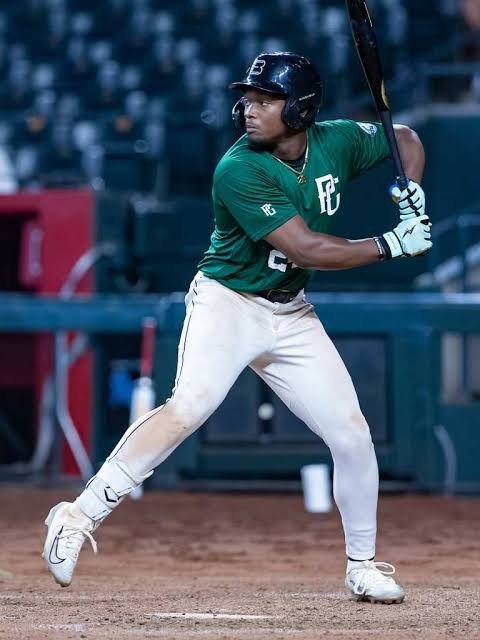
Image credit: Eric Booth Jr. (Freek Bouw/Four Seam Images)
Straight out of Oak Grove High School in Mississippi, Eric Booth Jr is a speedy center fielder (max score of 70 on the scouting grade for running). His contact grade of 55 is slightly higher than his power grade of 50, but he showed that he can tap into power, winning the Perfect Game All-American Classic home run derby. Interestingly, he hits 30% less singles than the average round one player drafted out of high school. However, he averages slightly more doubles and triples to make up for it. He is projected to be a pull hitter.
For the Orioles, having some of the lowest minimum wall heights in baseball, it can mean in less chances for Booth Jr. to try to score a run from baserunning. Baltimore also ranks higher in average temperatures for games, which tends to be detrimental for contact hitters. However, Camden Yards not having a roof is great for players like Booth Jr., because it’s not a single-friendly quality. If the projections hold up, Booth Jr ‘s pull side hitting towards right field will probably be aided by the stadium having one of the shortest distances from home plate to right field.
Overall Fit Grade: B-
#8 Drew Burress, CF – Athletics
Photo by Jason Getz / AJC
In his collegiate career, Drew Burress became Georgia Tech’s all time home run leader, hitting 60 home runs over 3 seasons. He was a consensus First Team All-American in 2025 and 2026. He also spent some time in the CCBL. His contact scouting grade is still good, at a 55, but his real strength is shown in his power grade of 60. He also hit 42% more doubles than the average round 1 draftee. His only thing is that he doesn’t hit a lot of singles, but that’s to be expected from a power hitter like Burress. He has slightly above average speed, coming in at a grade of 55.
As for the Athletics, we don’t know how their new planned Las Vegas Ballpark will affect hitting trends. However, with Burress tending to be a pull hitter, the new Vegas stadium’s left field wall distance of 340 feet would rank among the farthest in baseball. This could affect the amount of home runs that Burress would hit. The fixed roof over the planned stadium will probably show off Burress’ ability to hit doubles.
Overall Fit Grade: C+ (hard to predict because we don’t have data on new Las Vegas Stadium)
#9 AJ Gracia, CF – Atlanta Braves
After spending 2 years at Duke, AJ Gracia transferred to Virginia for his junior year. He has both power and contact, with his scouting grades for both coming in at 55. He has slightly below average speed, coming in at a grade of 45. This is shown as he only averaged .011 triples per game, compared to the average collegiate round 1 draftee at .027. He is known for his plate discipline and pull side power. He also spent some time at the CCBL.
For the Braves, his pull side tendencies would appear to be complemented by Truist Park’s shorter distance from home plate to the right field wall (he’s a lefty). However, with the stadiums longer outfields, and Atlanta having higher average temperatures, and being at a higher elevation, Gracia’s lack of triples might be noticed in such triple-friendly conditions.
Overall Fit Grade: D+
#10 Tyler Bell, SS – Colorado Rockies
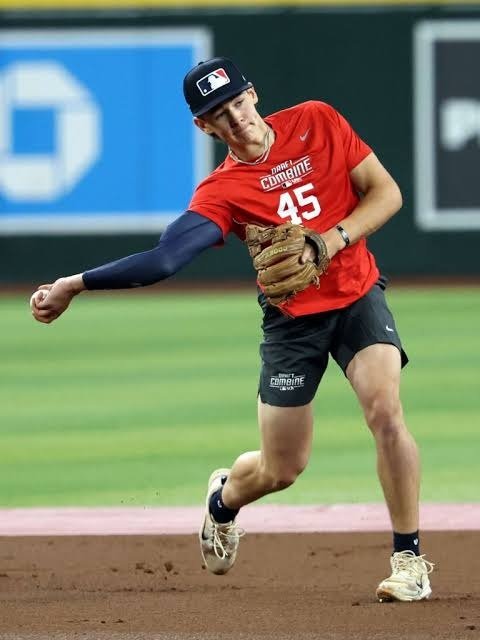
Image credit: Tyler Bell (Photo by Bill Mitchell)
First-team All-SEC honoree and USA Baseball Collegiate National Team nominee, Tyler Bell turned down a chance to play baseball straight out of high school, to become an elite switch hitting shortstop at Kentucky. Like most shortstops, he has excellent defense, and his contact and power are both average. He tends to hit the ball towards right field no matter which side he’s batting from. He has average speed.
For the Rockies, Coors Field has some of the deepest outfields, so Bell’s lack of explosive power might make it difficult to hit it past 350 feet out in right field, even with the thin air. All of Bell’s other stats tend to hover around average for other Round 1 players.
Overall Fit Grade: D-
#11 Chris Hacopian, 2B – Washington Nationals
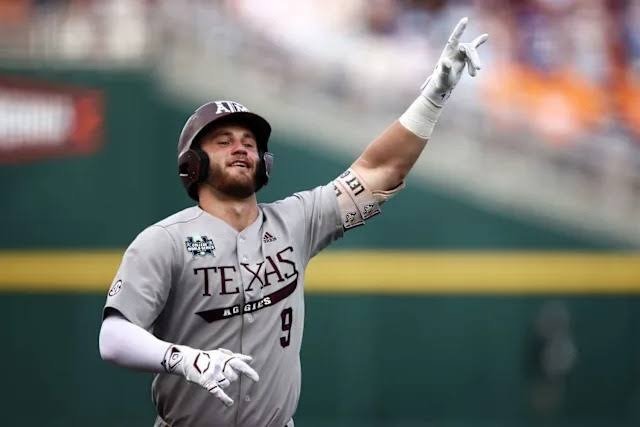
Photo by Tyler Schank/NCAA Photos via Getty Images
Out of Texas A&M, Chris Hacopian spent two years at Maryland before transferring to College Station for his last year of college play. He earned Second-Team All-Big Ten honors in both his years at Maryland, and was named a Baseball America All-American and First-Team All-SEC honors at Texas A&M. He has elite contact abilities, with his scouting grade coming at a 60, versus his 50 grade at power. He does have below average speed, with a scouting grade there at 40. This is shown as he hits 2.05x less triples than the average round 1 player, and about 30% more GDPs.
For the Nationals, D.C’s higher average temperature tends to not favor batters who favor contact over power. Their average minimum height for walls probably won’t help nor harm the amount of runs Hacopian will score due to his baserunning. They also average a rank of 17 among average temperature, elevation, and outfield length, also not trending towards an effect on Hacopian’s lack of triples. Nationals Park doesn’t have a roof, which tends to alleviate the amount of GDPs hit.
Overall Fit Grade: C+
#12 Jared Grindlinger, OF – Los Angeles Angels
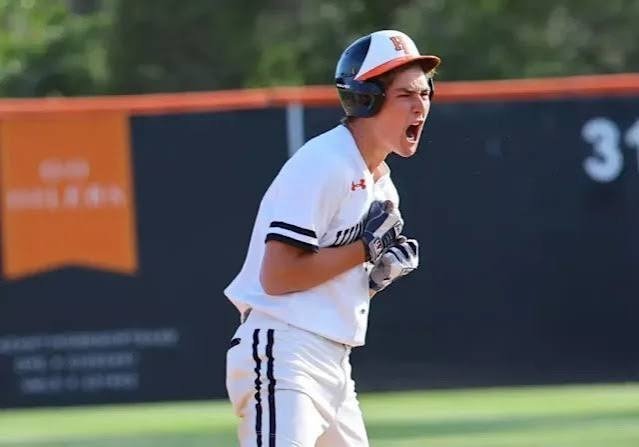
Photo by Nick Koza / LA Times
Out of Huntington Beach High School in California, Jared Grindlinger is a two-way outfielder and LHP. He is a contact hitter, with his scouting grade of 50 much higher than his power grade of 40. He is a whole field hitter. His speed is below average at a grade of 40. His .063 triples and home runs per game is also a lot less than the high school round one draftee average of .119, and .223, respectively.
As for the Angels, having one of the longer outfields in the MLB, and Anaheim being in one of the warmest areas, it does not favor hitters who prefer softer contact like Grindlinger. However, with one of the lowest minimum heights for walls, Grindlinger’s baserunning skills should not cost the Angels any runs should he make it up to the majors with the organization. With an average rank of 10 for daytime temperature, outfield length, and elevation, this combination might reflect negatively with Grindlinger’s lack of triples. The Angels consistently schedule more night games, so Grindlinger might see an increase in dingers.
Overall Fit Grade: C+
#13 Trevor Condon, CF – St. Louis Cardinals
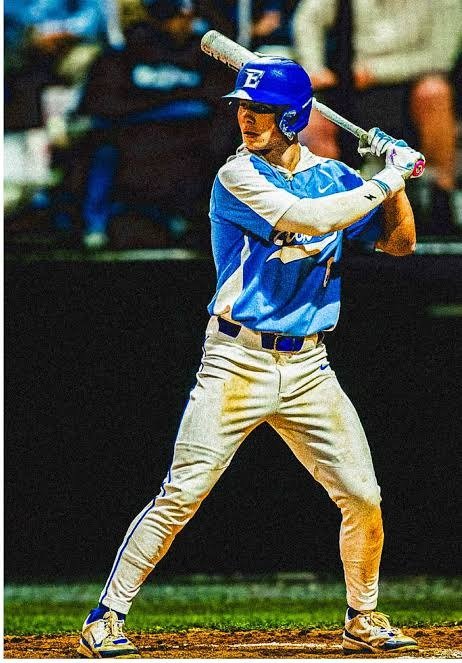
Photo via Instagram (@trevor.condon_2)
2026 Georgia Gatorade Baseball Player of the Year and First Team All-American honoree Trevor Condon was drafted out of Etowah High School in Georgia. A lefty hitter and righty thrower, Condon has the ability to hit the ball to any part of the field. He is a contact hitter, with a scouting grade of 60 versus a power grade of 45. He hit 30% more doubles than the average high school player drafted in round one. He maxed out the speed scouting grade.
For the Cardinals, St. Louis having one of the highest average gametime temperatures typically does not favor contact hitters like Condon. Not having a roof also tends to not be beneficial for players that hit a lot of doubles. However, Busch Stadium having one of the higher minimum wall heights in baseball means the Cardinals can take advantage of Condon’s speed to score runs.
Overall Fit Grade: D+
#14 Jacob Lombard, SS – Miami Marlins
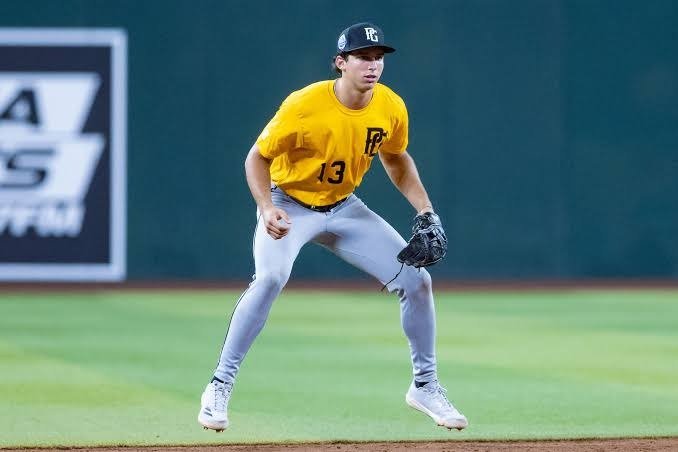
Image credit: Jacob Lombard (Freek Bouw/Four Seam Images)
Out of Gulliver Prep High School in Florida, Jacob Lombard stayed close to home in being drafted by Miami. His stats are very polarized, hitting .966 singles per game, and 55% more home runs than the average round one high school player drafted, but hitting 2.42x less doubles, and 0 triples in his last year of high school ball. He’s a power hitting (60 scouting grade), but he makes decent contact, coming in with a 55 scouting grade. He has a slight tendency to pull, but is able to hit the ball anywhere. He’s very fast, with a 65 run grade.
For the Marlins, LoanDepot Park’s retractable roof is almost always closed, so the difference between Lombard’s single and double stats might be even more extreme. With an average rank of 18th in length of outfield, average temperature, and elevation, Miami shouldn’t help nor harm Lombard’s lack of triples. Miami typically plays less day games than other teams, so that might be beneficial to keep Lombard hitting dingers. Their stadium’s longer outfield also tends to favor players who like to make hard contact. Finally, LoanDepot Park has some of the highest minimum wall heights, which also favors players who can score based on their baserunning skills.
Overall Fit Grade: B
#15 Ryder Helfrick, C – Arizona Diamondbacks
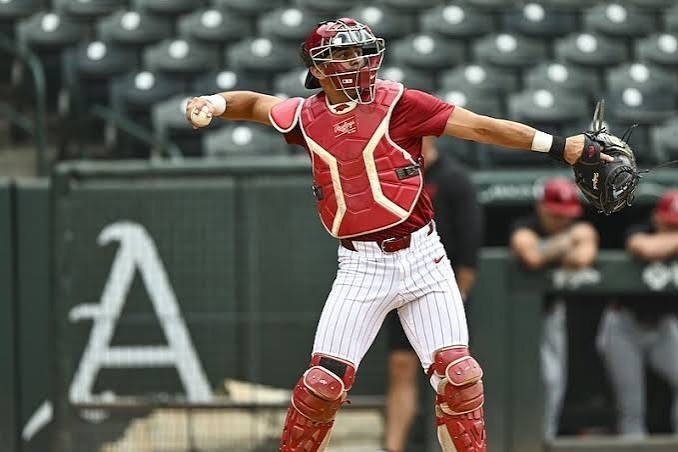
Photo by Hank Layton / WholeHogSports
Considered one of the best defensive catchers in the 2026 class, Ryder Helfrick is a power hitter (55 scouting grade vs 45) out of Arkansas. He also spent summers at the CACL and CCBL. He hit 32% less singles than the average round 1 draftee, 76% less doubles, 85% less triples, and had a .050 less batting average. However, he did hit 10% more home runs. He makes up for this with a 65 arm grade. Like most catchers, he’s not particularly fast, with a 40 run grade.
For the Diamondbacks, Chase Field having one of the longest outfields in the MLB is perfect for Helfrick because it tends to favor those who make hard contact. However, Arizona usually needs the roof closed, which could make Helfrick’s underwhelming single and double numbers a lot more obvious. With an average rank of 2nd in outfield length, average temperature, and elevation, that combination tends to favor hitters who hit a lot of triples, and that’s not Helfrick. That long outfield, combined with some of the highest walls in baseball, doesn’t tend to favor those who don’t have high batting averages. However, ranking 19th in minimum wall height, teams don’t tend to need baserunning to score runs.
Overall Fit Grade: D+
#17 Logan Hughes, LF – Houston Astros
Logan Hughes has been everywhere, playing a year at Stetson, then transferring to Texas Tech for two years, and also spending time at the FCSL, NECL, and CCBL. He possesses good contact and power, both having a scouting grade of 55. Hughes sits right around average in all stats. He is an all field hitter, but the Astros want him to pull the ball more. He has below average speed at a grade of 40.
Houston almost exclusively plays under a roof, so it might make Hughes’ tendency to hit less singles show a little bit more. If he did pull the ball more, Daikin Park has an average distance from home plate to right field.
Overall Fit Grade: C
#18 Justin Lebron, SS – Cincinnati Reds
Perfect Game USA Second Team All-American and ABCA/Rawlings Second Team All-Southeast Region selection Justin Lebron was selected 18th out of Alabama. He also spent a summer at the CCBL. He’s a pull power hitter, as his power scouting grade is a 60 vs a contact grade of 45. He led the SEC in stolen bases, which is reflected in his current maxed out 70 speed grade. However, he only hit about .006 triples per game compared to the round 1 average of .027.
As for the Reds, Great American Ballpark has one of the shorter distances from home plate to the left field wall, which tends to favor pull hitters. They also have a larger outfield, which also tends to favor power hitters like Lebron. However, that same outfield length and Cincinnati’s higher average gametime temperature means Lebron might not be able to take advantage of triple-friendly conditions. Their higher minimum wall height means that there’s a good chance that the Reds could take advantage of Lebron’s speed to score runs, should he make it up to the majors in the organization.
Overall Fit Grade: B-
#20 Jake Schaffner, SS – Boston Red Sox
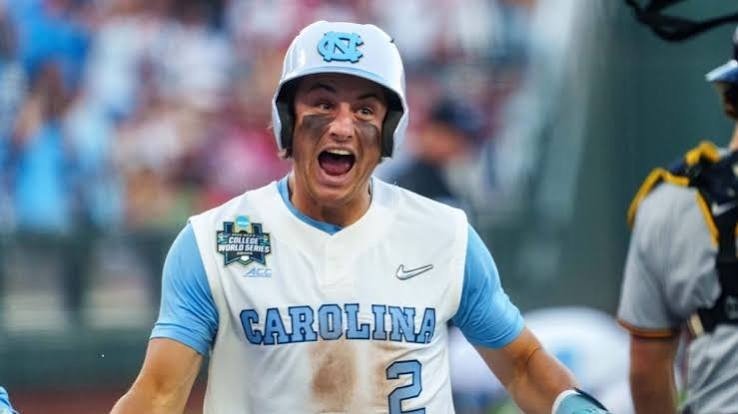
Image Credit: Dylan Widger-Imagn Images, Dylan Widger, Dylan Widger-Imagn Images
Jake Schaffner spent 2 years at North Dakota State, and summers at the NWDS and CCBL, before being drafted out of North Carolina. Batting left and throwing right, Schaffner has the ability to hit the ball into any gap. He is a contact hitter, with a scouting grade of 55, versus a power grade of 40. This is shown as he averages over one single per game, hits more than 142% more triples than the average round 1 draftee, and grounds into 2.16x less double plays. However, he does hit only .051 home runs per game compared to the round average of .213. He’s fast, explaining why he can leg out so many triples, with a run scouting grade of 60.
As for the Red Sox, with one of the lowest average temperatures, and one of the shortest outfields, it really tends to favor contact hitters like Schaffner. However, those same qualities, plus a low elevation might make Boston not very easy to hit triples. Fenway Park doesn’t have a roof, so Schaffner probably won’t get to show off a 1.01 singles per game statline, but he shouldn’t have a disadvantage in a non-double-friendly ballpark. That also means Schaffner should continue to avoid GDPs. Boston has the lowest minimum wall height in baseball, which is usually not helpful for players like Schaffner who use their speed to score runs.
Overall Fit Grade: C-
#24 Ace Reese, 3B – Seattle Mariners
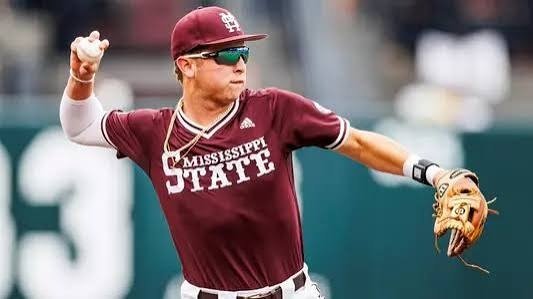
Photo by Matt Mattina / MSU Athletics
Ace Reese is another well traveled player, spending a year at Houston, then two years at Mississippi State, and summers at the CACL and CCBL. His first year at Miss. State, he earned the SEC Newcomer of the Year and played for the USA Baseball Collegiate National Team. A power pull hitter, Reese owns a power scouting grade of 60. He bats lefty and throws righty. He hit about 30% more home runs than the average round 1 draftee. He’s not very fast, only earning a run scouting grade of 40.
For the Mariners, T-Mobile Park has one of the shorter outfields in baseball, which tends to not be favorable for power hitters. However, Seattle is a night-dominant team, which usually favors home run hitters. Average minimum wall heights and average distance to right field (Reese’s pull side since he’s a lefty batter), shouldn’t affect his baserunning and pull tendencies.
Overall Fit Grade: C+
#25 Trey Ebel, SS – Milwaukee Brewers
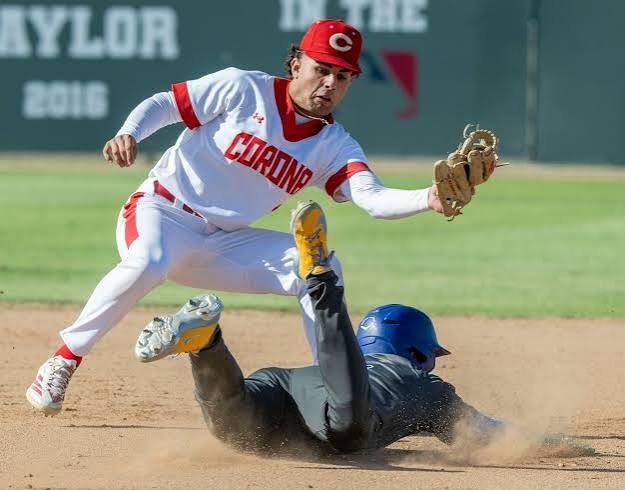
Photo by Terry Pierson / Presenterprise
Out of Corona High School in California, Trey Ebel is the 2nd brother in the Ebel family to be drafted by the Brewers. Even though his contact scouting grade of 55 is higher than his power grade of 45, he hit 30% more home runs than high school players drafted in the first round. However, he only hit about .064 triples per game to the high school average of .119. His run grade is slightly below average at 45.
For the Brewers, with American Family Field having one of the longer outfields in the MLB, it could affect the production of contact hitters like Ebel. That longer outfield and higher elevation also tend to show which players don’t hit a lot of triples. Milwaukee plays a standard number of day games, so Ebel’s home run production shouldn’t be affected, however.
Overall Fit Grade: C-
Prospect Promotion Incentive
#26 Carter Beck, CF – Atlanta Braves
Photo via X (@carterbeck2023)
Drake Baldwin winning NL Rookie of the Year gave the Braves this pick. They used it to draft Carter Beck, a member of the All-Conference First Team in the Missouri Valley. The Canadian played a year at Mary before playing at Indiana State for 2 years, and also spending time in the WCBL. Batting lefty and throwing righty, Beck tends to be a pull side hitter, but has the ability to hit anywhere in the field. He has even contact and power grades, both coming in at a 50. He hit .92 singles per game, and hit 74% more triples than the average round one draftee. He also grounded into 64% less double plays.
For the Braves, Truist Park not having a roof most likely will not increase Beck’s single production. However, this means Beck will most likely continue to see low GDP rates. Being a lefty, Beck’s pull side is right field, and Atlanta has one of the shortest distances from home plate to the right field wall. The combination of high elevation, high average temperature and longer outfields could let Beck show off his triple capabilities.
Overall Fit Grade: B
Competitive Balance A
#33 Taj Marchand, SS – Tampa Bay Rays
For the Ray’s second pick, they chose Taj Marchand out of James Island Charter High School in South Carolina. A contact hitter (scouting grade of 55), he’s projected to be a pull hitter. He currently has an all-field mindset due to his front foot mechanics. His speed is average at a grade of 50. His stats are not available online.
For Tampa Bay, their longer outfield tends to not help hitters who go for contact over power. If he were to become a pull hitter, he would benefit from Tropicana Fields short distance from home plate to left field.
Overall Fit Grade: B (based on the information available)
#34 Landom Thome, SS – Chicago White Sox
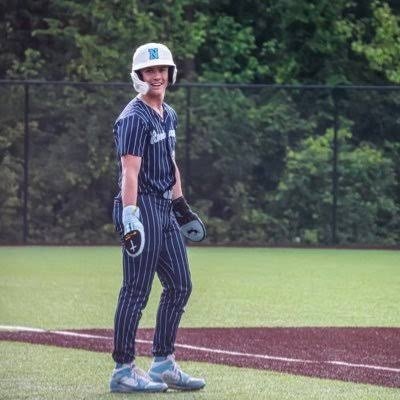
Photo via X (@landonthome25)
Son of Jim Thome, Landon Thome was the 2nd shortstop to be taken by the White Sox in the first round. Out of Nazareth Academy, he was the Illinois Gatorade Player of the Year. He bats left and throws right. While he’s an all field hitter, he does possess pull side power. He has the ability to connect with the ball, and send it deep, as he has scouting grades of 55 in both contact and power. He hit 40% more doubles and 98% more triples than the average high schooler drafted in round one. He has average speed, with his scouting grade there being a 50.
As for the White Sox, Thome shouldn’t see an increase in doubles, as Guaranteed Rate Field does not have a roof. Its average rank of 16th in average temperature, elevation, and outfield length (the factors that influence triples), Thome also shouldn’t see any change in triple output either. The White Sox have one of the deepest distances from home plate to right, so it’s good that Thome can hit the ball to any part of the ballpark.
Overall Fit Grade: C
#36 Tyler Spangler, SS – Philadelphia Phillies
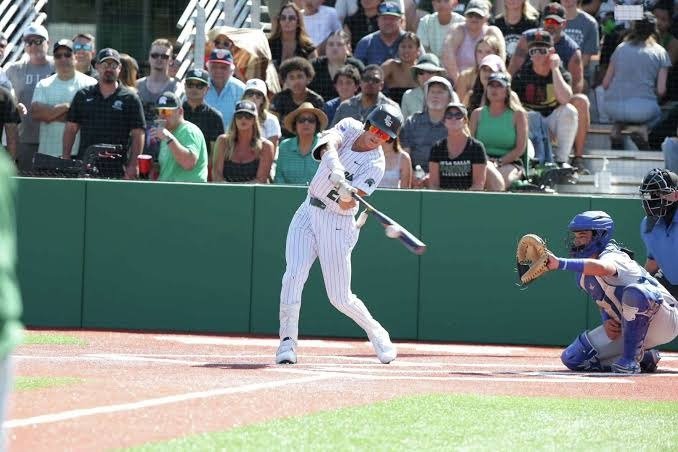
Photo by Tod Fierner
Out of De La Salle High School in California, Tyler Spangler still got picked in the first round despite being injured the entirety of his senior year. Throughout his junior year he hit 53% more triples, and 36% more home runs than the average high schooler drafted in the first round. However, he did hit 38% less doubles than the average. Batting lefty and throwing right, Spangler is an all field hitter with great pull power. He possesses average speed, with his run scouting grade at a 50.
For Philadelphia, Spangler should not see an increase in double production, as Citizens Bank Park does not have a roof. Their ballpark having one of the shortest outfields in the MLB, and being at a lower elevation, means it could affect Spangler’s triple productions. The Phillies play a standard amount of night games, so his home run production shouldn’t change either.
Overall Fit Grade: C
#37 Daniel Jackson, C – Colorado Rockies
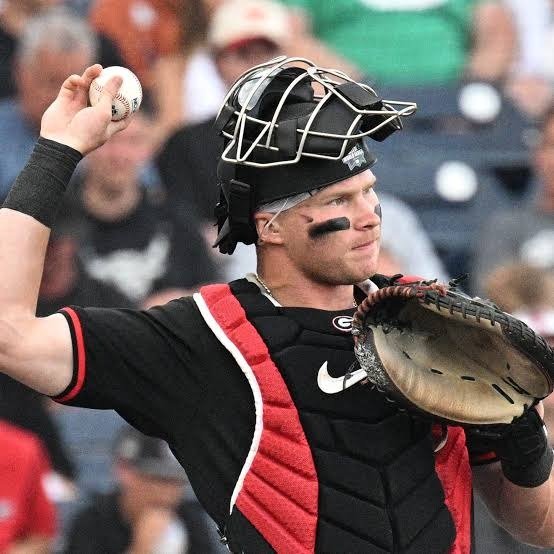
Image Credit: Steven Branscombe-Imagn Images
Golden Spikes winner, Dick Howser Trophy Winner, and Buster Posey Catcher of the Year Daniel Jackson was the final player selected in the first round of the MLB Draft. He spent a year at Wofford before going to Georgia for 2 years, and also spending summers at the NYCL, NWDS, and CCBL. He won the SEC Crown his final year of collegiate play. A switch hitter, Jackson tends to always hit the play towards right field. He did only hit about .01 triples per game compared to the round average of .027. He has average speed and contact, both of them pulling a scouting grade of 50. His power grade is a 60 however.
For the Rockies, they have one of the longest right field walls, so Jackson might be able to tap into some of his power to hit the ball out deep. However with the longest outfield and at the highest elevation by far, it might be obvious that Jackson does not have a lot of triple production.
Overall Fit Grade: C
**Data & Statistics Courtesy of:***:
[Sports Reference](https://sports-reference.com) (including [Baseball-Reference](https://baseball-reference.com))