
Now that the off-season is upon us, we can start looking ahead to the 2027 MLB season (if there will ever be one). One thing we can look at is the players from the last Amateur Draft. How well would they perform at their new ballparks?
The Braves bounced back after a disappointing 2025 season, to 94 wins, the NL East Title, and a Wild Card Series win over division rivals Philadelphia Phillies. While they lost to the Dodgers in the Divisional Round, there is plenty to look forward to for next season in Atlanta
Methodology: https://diamondbydata.com/how-well-will-each-round-1-hitter-fit-with-their-drafted-team/
#9 AJ Gracia, CF – Atlanta Braves
After spending 2 years at Duke, AJ Gracia transferred to Virginia for his junior year. He has both power and contact, with his scouting grades for both coming in at 55. He has slightly below average speed, coming in at a grade of 45. This is shown as he only averaged .011 triples per game, compared to the average collegiate round 1 draftee at .027. He is known for his plate discipline and pull side power. He also spent some time at the CCBL.
For the Braves, his pull side tendencies would appear to be complemented by Truist Park’s shorter distance from home plate to the right field wall (he’s a lefty). However, with the stadiums longer outfields, and Atlanta having higher average temperatures, and being at a higher elevation, Gracia’s lack of triples might be noticed in such triple-friendly conditions.
Overall Fit Grade: D+
#26 Carter Beck, CF – Indiana State (Prospect Promotion Incentive)
Photo via X (@carterbeck2023)
Drake Baldwin winning NL Rookie of the Year gave the Braves this pick. They used it to draft Carter Beck, a member of the All-Conference First Team in the Missouri Valley. The Canadian played a year at Mary before playing at Indiana State for 2 years, and also spending time in the WCBL. Batting lefty and throwing righty, Beck tends to be a pull side hitter, but has the ability to hit anywhere in the field. He has even contact and power grades, both coming in at a 50. He hit .92 singles per game, and hit 74% more triples than the average round one draftee. He also grounded into 64% less double plays.
For the Braves, Truist Park not having a roof most likely will not increase Beck’s single production. However, this means Beck will most likely continue to see low GDP rates. Being a lefty, Beck’s pull side is right field, and Atlanta has one of the shortest distances from home plate to the right field wall. Like Gracia environmental combinations could let Beck show off his triple capabilities.
Overall Fit Grade: B
#202 Jack Brenner, C – Fond Du Lac HS (Wisconsin)
Photo by Fond du Lac Reporter
With excellent zone coverage and a direct stroke, Jack Brenner used his contact skills to win Fox Valley Association Player of the Year. With a 50 contact scouting grade (vs 40 power), Brenner hit more than double the amount of triples than the average high school player around his draft position. However, he did hit about 50% less doubles than the average. He’s faster than most catchers, with a 55 run grade.
With Atlanta’s high temperatures, and larger outfield, it doesn’t really benefit contact hitters like Brenner. However, those same conditions, combined with the high elevation, could show off his triple abilities. Doubles are more common in stadiums that have a roof, and since Truist Park doesn’t have one, Brenner shouldn’t have to worry about having a massive gap in statlines for doubles.
Overall Fit Grade: B-
#232 Jacob Jarrel, C – Clemson
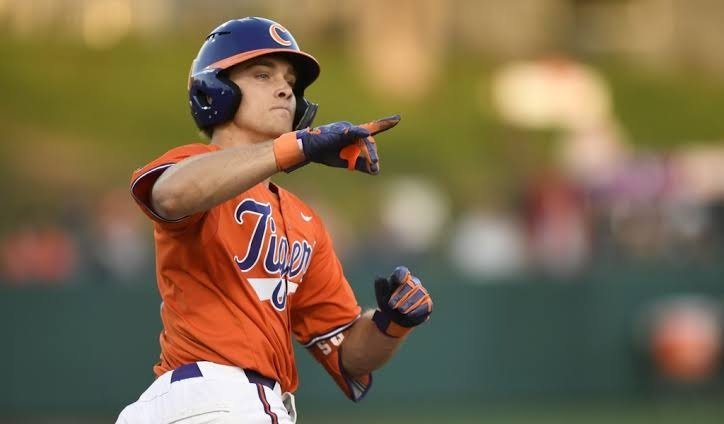
Photo by Ashby Mixon/Clemson Insider
One of 7 collegiate catchers to eclipse a 90th percentile exit velocity, Jacob Jarrel does real damage. He’s constantly, as he was a Strength and Conditioning All American. He also earned Second Team All-ACC Honors in 2026. With a wide stance and tight hand load, Jarrel does most of his damage towards the pull side. However, he did hit 4x less triples than the average college player drafted in round 8.
With Truist Park’s long outfield, it should be very beneficial for power hitters like Jarrel. It also has one of the shorter distances from home plate to the left field wall, so he should benefit from pulling from the right-handed side of the plate. However, the heat, elevation, and long outfield all make it noticeable who doesn’t have the ability to hit triples.
Overall Fit Grade: C+
#262 Parker Brosius, OF – Georgia Tech
“Straight stance with a short shift into contact, high hand load” – Perfect Game USA
With his .859 slugging percentage, Parker Brosius made it to 3rd higher in slugging percentage in GT history. He also played 2 summers at the CCBL, and one at each of the NWDS and SUNB. He made the Academic All-ACC Team and ACC Academic Honor Roll every year of his college career. However, he hit .25 less singles per game, and 89% less doubles than the average collegiate player drafted out of round 9. He did use his 6.3 second 60 yard dash to avoid grounding into double plays.
Like Brenner, being a contact hitter may not be super advantageous for Brosius. Also not having a roof might mask his low single and double rates, while keeping his GIDP rate low as well. With the second highest minimum wall height in baseball, Brenner’s speed should be useful in helping score runs off balls that hit off the wall.
Overall Fit Grade: B
#292 Ben Zeigler-Namoa, 1B – Hawaii
Photo by Kyusung Gong/AP Photo
“Model of Consistency” – University of Hawaii System News
From the islands, Ben Zeigler-Namoa frequently returned to the mainland to play for the WCL, NWDS, CCBL, and MLBD. He earned an Honorable Mention All-Big West and All Big West Academic award his final year of collegiate play. Being the “model of consistency”, Zeigler-Namoa has solidified himself as a strong contact hitter. He did hit almost 198% less triples than the average round 10 player.
Like many contact hitters drafted by Atlanta, we’ll have to see if my prediction is correct, and they might struggle to take advantage of power-hitting friendly conditions at Truist Park. Like Jarrel, he might also struggle to take advantage of an environment that encourages triples.
Overall Fit Grade: F
#322 Ryne Barker, 3B, Casteel HS (Arizona)
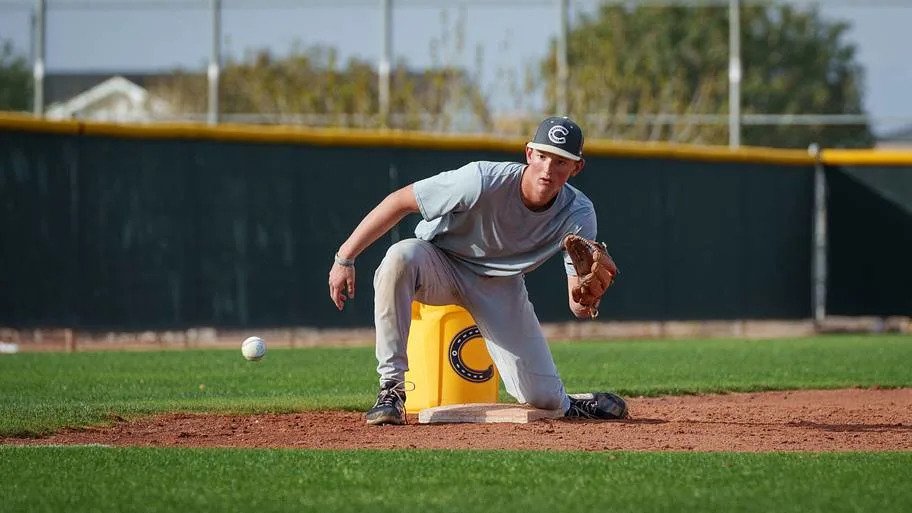
Photo via USA TODAY Network via Reuters Connect
A contact hitter out of Arizona, Ryne Barker hit 224% more triples than the average round high school player drafted around his position. However, he did hit 245% less home runs than that average. He consistently hits the ball towards right field (his pull side for being a lefty), since he moves towards first base before his swing is finished, forcing a slappy linear bat path that makes it difficult to drive the ball towards the opposite field. He’s also fast, with a 60 run scouting speed.
Barker should be able to take advantage of Truist Field’s triple friendly conditions. Since Atlanta has a shorter-than-average distance from home plate to the right field pole, being a lefty pull hitter should be beneficial for him. Baserunning should also be an advantage for him. And I think you all know my explanation about being a contact hitter by now…
Overall Fit Grade: B-
#352 Dominic Kibler, C – Wisconsin-Milwaukee
Photo via Milwaukee Athletics
Dominic Kibler spent 2 years at Kent State before transferring to Milwaukee. Once at Milwaukee, he had a great year, making the Horizon All-League First Team and ABCA/Rawlings Midwest All-Region Second Team. He also spent 3 summers at the NWDS, where he was named Lakeshore Chinooks MVP and All Star. He hit into 98% less doubles plays than the average college player drafted out of round 12, but he also hit about .25 less singles than that average as well. A pull hitter, with a repeatable left-handed swing that generates natural pop towards right field.
Kibler’s GIDP rates should stay low, given Truist Park doesn’t have a roof, but that also means his low single rate won’t stand out as well. He’s also another lefty pull hitter that gets to benefit from Atlanta’s short 325 feet distance from home plate to the right field pole.
Overall Fit Grade: A-
#422 Caleb Klein, OF – Southeast Missouri State
Photo via MiLB
Note: Data is only from his time at SEMS and PROS
With a 90% contact rate, Caleb Klein knows how to hit the ball to all parts of the field. Originally playing for Southeastern Community College, he kept up the southeast theme and transferred to Southeast Missouri State. He also played for PROS. He hit about 31% more triples than the average collegiate draftee out of round 15.
Another victim to being a contact hitter in Atlanta… smh. However, he does get to benefit from being the heat, elevation, and long outfield to try to hit more triples.
Overall Fit Grade: C
#472 Dalton Harper, C – Niagara County CC
Photo via Spectrum News 1
NJCAA Division 3 Player of the Year, Dalton Harper is our first righty pull side hitter! While he did play D3, he also spent summers with big names at the PGCL and NWDS. Compared to the collegiate round 16 average, he hit more than double the amount of home runs, and his batting average was .15 higher.
Being a righty pull hitter is a little less advantageous than being a lefty pull hitter, as Truist Park has a slightly above average distance from home plate to the left field pole. He also gets to take advantage of the triple-friendly conditions. The higher walls, and longer outfield also tend to encourage higher batting averages, which plays the Harper’s advantage.
Overall Fit Grade: B-
#562 Austin Fawley, C – Ole Miss
“Impressive raw power that’s his obvious carrying tool…allows him to generate tons of strength and all-fields power” – Baseball America
As a power hitter, it’s not a big surprise that Austin Fawley hit less than half the singles and almost 3 times fewer the amount of doubles than the round 19 collegiate average. However, he did hit 136% more home runs than the average. The pull hitter spent 2 years at Ole Miss, but he also spent his freshman year at Kentucky. He also spent 1 summer at the NWDS and PGCL.
As a power hitter, Fawley should take advantage of the long outfield in Atlanta. He shouldn’t have too little singles or doubles that it draws alarm either, due to the lack of roof above Truist Park. Like Dalton Harper, he gets to take advantage of the home run friendly conditions, but it’s slightly harder being a right pull hitter than a lefty pull hitter.
Overall Fit Grade: B
Braves Draft Grade Based on Player Fit: C+
The Braves honestly did a pretty good job in the draft, as a lot of their players should see some advantages if they make it up to the majors with Atlanta. However, there were a few choices where their hitting trends don’t seem to fit well with the environmental conditions at Truist Park. There was a big difference between power and contact hitters, and hitters that hit a lot of triples, and those that don’t. We did see our first grade in the A range though. Will Baltimore get the first true A?
**Data & Statistics Courtesy of:**
* [Sports Reference](https://sports-reference.com) (including [Baseball-Reference](https://baseball-reference.com))